Tuesday, March 28, 2023

3/28/23: Blood Draw and LFT Results

I have definitely crossed some kind of inflection point in my cancer journey. Up until now, I had gotten so used to frequent medical treatment that appointments felt typical and routine. Today, for the first time in a long time, I went to get my blood drawn in advance of a hepatology appointment next week, and I felt like it was an aberration from my schedule, an inconvenience. Even though my actual feelings were kind of negative, I figure it's a positive development overall, a sign that cancer is not such a central fixture in my day-to-day life anymore. 

Anyway, I looked up my results online, and my LFTs (liver function tests) are essentially back to my pre-Tamoxifen values. Yay! (Numbers in red were problematically out of range.) 

DATE       ALT  AST  AROMATASE INHIBITOR
03/28/23   19   20   Anastrozole
11/10/22   23   22   Anastrozole
08/16/22   26   22   Anastrozole
08/08/22   26   26   Anastrozole
06/10/22   46   34   Anastrozole
05/13/22   57   41   Anastrozole
04/15/22   78   56   Anastrozole
03/18/22   86   63   Anastrozole
02/18/22   79   65   Tamoxifen
02/08/22   74   51   Tamoxifen
01/21/22   62   53   Tamoxifen
12/23/21   65   49   Tamoxifen
06/10/21   25   22   Tamoxifen
12/23/20   18   18   Exemestane
07/24/20   19   19   Exemestane

Hopefully this means next week's hepatology appointment will be my last.

(Book Review) Hormone Repair Manual: Every Woman's Guide to Healthy Hormones After 40 by Lara Briden

This book isn't about cancer, and it only touches upon menopause that is induced medically or surgically. Still, I decided to include it here because it talks about how important estrogen is to all different parts of the body, which is relevant because my hormone therapy has actually eliminated all my estrogen production. Here is my 2-star review as posted on Goodreads, followed by some additional thoughts.

This book was written by a naturopathic doctor. I am a strong believer in science and evidence and data, which means I do not generally subscribe to naturopathy or other forms of alternative medicine. I do, however, acknowledge that the human body is complex, and there is still so much we don't know, which means there may be some aspects of alternative medicine that really do work, and we just haven't done the studies yet. 

I appreciate that the author did not try to replace conventional medicine. In the introduction, she explicitly asked the reader to "speak with your doctor or pharmacist about possible interactions with your medical conditions or medications" (p. viii) when trying her recommendations. I also liked that she included "How to speak with your doctor" sections in which she provided helpful language and wording that can be used to bring up topics with medical doctors.  

I think the average, healthy woman turning 40 will find valuable information in this book, and I want to emphasize that my rating is a reflection of my personal experience reading it. Here's why I picked it up: While in my early 40s, my treatment for hormone-positive breast cancer involved eliminating estrogen from my body, which meant taking medication that put me into medically-induced menopause, and then later getting my ovaries removed, which put me into surgically-induced menopause. I have experienced all the usual symptoms of menopause, but the most common suggestion for managing symptoms is to get hormone replacement therapy (HRT), which is not an option for me because it would completely undermine my breast cancer treatment. So, I am looking for natural remedies to manage symptoms of menopause. 

As it turns out, surgically-induced menopause is quite a bit different from natural menopause, and I was discouraged when the book stated early on that "surgically and medically induced menopause...can produce stronger symptoms than natural menopause and almost always requires estrogen plus progesterone therapy" (p. 9), which I already know is contraindicated for me because of my hormone-positive breast cancer. Just a few pages later, I was encouraged to read, "If you don't want to take hormone therapy, that's perfectly okay because there are other options for many symptoms." (p. 17) I did manage to come away with some helpful suggestions, mostly from Chapter 5 "General maintenance for perimenopause and beyond," Chapter 7 "Rewiring the brain: help for hot flashes, sleep, migraines, memory, and mood," and Chapter 10 "What comes after."  

The writing was straightforward, and the content was conveniently broken into easily digestible chunks. Still, I think the information could have been organized better; the author frequently restated the same information and constantly redirected the reader to other chapters, making the text feel disjointed and repetitive. I read the book cover-to-cover because I wanted to know everything, but perhaps this book would best be used more as a reference, where you skip around and read only the sections that are immediately relevant to you. Incidentally, the author referenced Professor Jerilynn C. Prior so often that I wondered if maybe I should go straight to the source and read her works instead!

I would actually rate this book 2 1/2 stars, but since Goodreads doesn't allow for half-stars, I rounded down to 2. I was put off when I read that "the only time estrogen plus progesterone therapy is truly needed is for the prevention of long-term health risks associated with early or medically induced menopause." (p. 128) The word "needed" irked me; given my medical condition as described earlier, even if I "need" hormone therapy for long-term health, I am absolutely not a candidate. The author only mildly dialed back her statement about 10 pages later when she acknowledged, "If you have a personal or family history of breast cancer, you will probably be counseled to avoid estrogen therapy." (p. 139) I guess people with a history or high risk of breast cancer who experience early/medical/surgical menopause are just considered an exception case, and I felt like the message to me was: Hmm. You don't fit into any of the standard boxes. Looks like you are now doomed to poor health with "an increased risk of osteoporosis, heart disease, dementia, and premature death." (p. 140) (For the record, I was aware of these long-term risks associated with surgical menopause before I had my ovaries removed, but they were outweighed by the more pressing risk of breast cancer recurrence.)

Also, I wasn't comfortable with the way the author made assumptions about what my doctor may or may not know, e.g., when she wrote, "Your doctor thinks progesterone's only job is to protect the uterus, but it has many other benefits." (p. 138) Moreover, for almost the entire book, every time she mentioned talking to "your doctor", I imagined a patient talking to their primary care physician or a gynecologist, but it wasn't until late in the book that one of her "How to speak with your doctor" suggestions included, "Should I have a referral to a gynecologist to discuss this possibility?" (p. 227) The realization that gynecologists were not already implicitly included in all previous references to "your doctor" shocked me! I guess it does not go without saying that if you have concerns about menopause or menstrual health, a gynecologist would be a great place to direct questions; if insurance is a hindrance, look for a Planned Parenthood near you.


Some additional thoughts:

I've always understood that getting Lupron and removing my ovaries were forms of ovarian suppression, a type of hormone therapy that eliminates most of the estrogen in my body so hormone-positive breast cancer can't feed on it. I also know that taking an aromatase inhibitor pill (exemestane, and then anastrozole) finishes the job of estrogen elimination by stopping estrogen production in places other than my ovaries, a condition that does not occur in natural menopause. I don't know if I thought random cells were just making estrogen for fun, but it's only after reading this book that I now realize that the aromatase inhibitor is depriving my heart, brain, liver, muscles, and other tissues of the estrogen they need to function properly.

Because this book is based on naturopathy, I made sure to follow up on this idea with a search for corroborating evidence from a reputable source, which confirmed:

"Although the roles of estrogens in gonadal organs are well understood, recent studies have begun to demonstrate that localized estrogen production plays tissue-specific roles, with or without dependency on circulating estrogen. The cell- and tissue-specific actions of estrogen and ERs are directly involved various age-related diseases. Nevertheless, it remains unclear how the local synthesis of estrogens and their respective receptor functions are controlled in normal aging. We believe that estrogens are no longer just sex hormones, but important therapeutic targets for preventing diseases as disparate as osteoporosis, heart disease, and neurodegeneration."

Well, my oncologist has said that I should expect to take an aromatase inhibitor pill for 10 years total, so I guess I can hope that when I stop, when my various tissues are able to produce estrogen locally again, maybe some of my menopause symptoms will improve, and maybe some organs or systems will be able to function better, in ways I don't even know. 

Monday, January 23, 2023

1/23/23: New Stretches Helping with Neuropathy in Right Toes

To address the neuropathy (numbness and tingling) in the last two toes on my right foot (which recently started feeling like my sock is wet, but it's not), my oncologist had suggested stretching

My OB/GYN and GYN surgeon both seemed to think it's possible that the neuropathy could be related to having had poor body positioning while recovering from BSO surgery. To me, this potential connection to lying down made me think that any "pinched nerve" must be in the area of my hips or back. 

So, I'd been doing full-body stretches, the kind I used to do in dance class growing up. Mostly, these stretches were variations of sitting on the ground with my legs either extended together straight in front of me, or spread out to either side, and elongating my back while bending at my waist and reaching for my toes. Generally speaking, I think stretching can only help, but they didn't seem to help this particular issue.

The other day, out of the blue, it suddenly occured to me to stretch my legs specifically. I started doing the types of stretches I used to do when I was on the track & field and field hockey teams in high school, ones that isolated the calves, quadriceps, and hamstring muscles. To my surprise, these helped! The wet sock feeling is gone, and the neuropathy feels very much reduced in my pinky toe. 

At first I felt a little sheepish that it took so long to make this discovery. But when I thought about it, why should I have known? I'm not a physical therapist! None of my doctors gave me any specific recommendations or directions, so it's not like they knew either. 

Anyway, this is an encouraging development. I'll keep up the stretches and hope for continued improvement, or at least for things to not get worse. 

Friday, January 13, 2023

1/13/23: OB/GYN Appointment

Today's appointment was an annual check-up, but I figured I'd include it in this blog because it's my first time seeing my regular OB/GYN after getting my ovaries out.

First, she reviewed my medical history since the last appointment. She saw the oophorectomy surgery in my medical records, but had not seen the Tamoxifen and hepatology-related stuff, so I caught her up and explained how that led to removing my ovaries. Without knowing that background, I think she at first assumed that my oophorectomy was elective, since we had previously discussed that option.

(It's interesting to me how my different medical providers all seem to gather different information from my records, even though they're all in the same hospital network.) 

After going over everything from last year, she asked if I had any questions. I asked her if she thought the neuropathy in the last 2 toes on my right foot could be a symptom of menopause? At this point, I would describe the sensation most like this: it feels like my sock got wet around those toes, but when I check my sock, it's dry. But it also still feels like the sense of touch is subdued in those toes, similar to how my chemo-induced neuropathy feels in my fingers, as I described to my medical oncologist recently. Anyway, my OB/GYN didn't think it sounded like menopause. She said it's possible it could have resulted from how my body was positioned during recovery from surgery (similar to what my GYN surgeon said), in which case, she said it could still improve, though she did not elaborate on how or why.

(Meanwhile, I Googled the "wet sock" feeling, and was surprised - and somewhat relieved - to find some references. If my toes still feel weird by the time my next PCP appointment rolls around, I might ask about whether or not I should see a neurologist, or maybe even a podiatrist, since the links I found were posted by foot specialists.)  

Anyway, the doctor did a brief breast exam and also looked at my oophorectomy scars, then did the internal exam. She said everything looks fine, I don't need any other follow-up besides my annual check-up. Yay! At this point, she asked me again if I have any more questions; notably, she didn't make any signs of leaving until after I said no. 

I think that's actually what I appreciated most about this appointment, how the doctor asked me multiple times if I had any questions, and how she didn't appear rushed when asking. It really made me feel like she wanted to help me if she could, rather than me feeling like I am monopolizing the doctor's time or being a "difficult" patient by asking questions.

Monday, January 9, 2023

1/9/23: NP Appointment

Today's appointment was my annual check-in with the Breast Center.

I think it took all of 5 minutes! Maybe 8. Definitely not 10.

I was impressed, again, that my NP had read enough of my file to know that I had switched from Tamoxifen to anastrozole. We talked briefly about that, which led me to mention my oophorectomy in June, which she had not seen in my records, for whatever reason. She said she hadn't ever heard of Lupron not working, and I said my oncologist had given me the same impression, since she had called it "a little weird" and couldn't explain it. 

After going over everything that happened last year, she said she hoped everything else is going well. I said yes, other than getting covid over Christmas! I didn't expound upon my covid illness, I just said I'm better now, and optimistic that my medical situation might finally become stable.

She did a clinical breast exam, and said my double mastectomy scars are healing really well, specifically mentioning that the "dog ears" (the extra skin at the outer ends of each scar) look better, i.e., smaller. I said I do think my scars are less bumpy than before, especially around the dog ears, and she said that probably means there's less scar tissue. She asked if I massage the area, because that would help. I said I don't do it on purpose to help the scars, but my underarms still frequently feel numb and tingly and tight (particularly on the right side), so I do now have this funny habit of rubbing the area any time I'm just sitting around watching TV or using the computer. She joked how my kids are probably like, "Oh, that's just mom, rubbing her armpits again!" Haha. Apparently, though, all that rubbing is good for healing, so great!

I was relieved when she said everything looked fine. I wasn't anticipating any problems, but there's always that small part that is fearful of recurrence. 

She said I'll have one more appointment with her in a year, and then that'll be the end of my 5 years of post-diagnosis follow-ups! I honestly can't believe it's almost been 5 years... It sounds like a long time, but it feels too short because so much has happened and I can't believe my surveillance window is close to ending. Again, I didn't ask what happens after that; I suspect they will cut me loose, and I hope that by the time next year rolls around, I'll feel ready for that step.

Throughout the appointment, I think I spoke very matter-of-factly about everything, which perhaps gave the NP the impression that I accept and understand the whole of my situation. I think I do, and I never really considered that that might be unusual. I can't remember her words verbatim now, but the last thing she said to me was something like, "Well, you definitely have a good attitude, and that's, like, 99% of doing better." I'm assuming she used the "99%" number metaphorically, but I was immediately struck by how much that one sentence echoed the message in the book I just read!

Sunday, January 8, 2023

(Book Review) Radical Remission: The Nine Key Factors That Can Make a Real Difference: Surviving Cancer Against All Odds by Kelly A. Turner

Here is my 2-star review as posted on Goodreads, followed by some additional thoughts on how I related to the book personally.
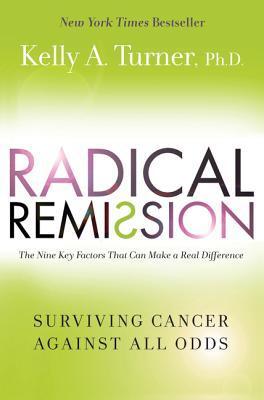
This book was mentioned by a friend who was diagnosed with glioblastoma brain cancer. Facing a bleak prognosis, she refused to resign herself to fate and has committed herself to defying the odds. This is not the type of book I usually read, however, when faced with the possibility of imminent death, I can understand the desire to grasp at all possible sources of hope, and I was intrigued.

The premise is fascinating: there are real people whose medically diagnosed cancer disappeared with no known medical reason, so let's study them and try to figure out what happened. Where the book falls short, for me, is how the investigation does not actually look for scientifically supported reasons for recovery, but instead relies almost entirely on each person's opinion on what they think caused their cancer to go away.

First, if you are the kind of person who absolutely never believes in ghosts, don't even try to read this book. There are no ghosts here, but for this book to even be readable, you have to be open to the idea that something might possibly, could be real, even if it defies all reason and there's no scientific explanation. You don't have to buy into alternative medicine, or believe in the paranormal, to get something positive out of this book, but you do need to take everything with a grain of salt.

Now, I am 100% a believer in conventional medicine and science, so I read most of this book with an attitude of, "Wow, that's interesting, not sure I believe all the details, but how amazing that that person is still alive!" The author does not exactly advocate for alternative medicine, in fact, she stated unambiguously that "most people will need conventional medicine to outrun cancer." (p. 9) But right off the bat, in the book's introduction, it's clear that she believes in alternative medicine, since her husband is a traditional Chinese medicine practitioner and studied "an esoteric form of energy healing." (p. 5) When telling the stories of survivors, she gave validity to "[t]he notion that a cancerous tumor is simply a buildup of stuck energy," (p. 94) and she reported matter-of-factly on the various alternative therapies people used, like Reiki or other forms of "energy healing", without any commentary regarding the controversy surrounding those methods.

In fact, it's that lack of transparency that led me to rate this book 2 stars. One of the featured survivors is someone who credits Brazilian John of God for curing his brain tumor. It was a very compelling account, so of course I immediately Googled John of God. Turns out, he's a convicted sex offender! The allegations first surfaced in 2018, and this book was published in 2014, so the author is off the hook for that particular oversight, however, James Randi, known skeptic of paranormal claims, discredited John of God in 2005. I think the complete omission of any reference to documented efforts to expose him as a fraud is downright negligent and detracts from this book's credibility. The author only hinted that John of God may not be legitimate when she wrote that the power of John of God's healing center "could simply be the placebo effect; in other words, our sheer belief that something powerful happens at John of God's center could have caused us to have a deeper meditation experience." (p. 250)

Another thing I wasn't fond of was the author's decision to soften the outlandishness of John of God's healing methods by using carefully chosen words. Though many online articles refer to him succinctly as a "psychic surgeon", the author described John of God as having "the ability to leave his body and go into a trance, thereby allowing the spirit of a higher being to enter his body and perform energetic healing work." (p. 237)

Not all the stories were as off-beat as the one involving John of God, but many of them had alternative medicine elements. Ultimately, I felt conflicted by the personal stories included in each chapter. On the one hand, they were very inspiring and would certainly give hope to a cancer patient with a poor prognosis; on the other hand, all the alternative medicine therapies were beyond belief, if you ask me.

Despite all that, if you can disregard the parts that you find unbelievable, there are valuable insights in this book that would benefit any cancer patient, regardless of prognosis. The nine "key factors" that radical remission patients share all sound very reasonable:
  1. Radically Changing Your Diet
  2. Taking Control of Your Health
  3. Following Your Intuition
  4. Using Herbs and Supplements
  5. Releasing Suppressed Emotions
  6. Increasing Positive Emotions
  7. Embracing Social Support
  8. Deepening Your Spiritual Connection
  9. Having Strong Reasons for Living
Only two items are physically related to your body: changing your diet and taking supplements. While some diets and supplements may be more well-founded than others, at least the author periodically reminded readers to consult their doctors, e.g., "Remember, always speak to your doctor first in case your fast needs to be medically supervised." (p. 28)

If you're like me, you may be surprised that exercise is not on that list. Most health guides lead with diet and exercise, and throughout the book, I kept wondering why exercise was not singled out, especially since it was certainly mentioned in passing, e.g., "Thanks to a combination of yoga, hiking, and walking, [John] now feels like he's in the best shape of his life" (p. 39) and "[Jenny] also continued with the same daily exercise regimen she had created for herself years earlier." (p. 127) It wasn't until the very end of the book (p. 282) that the author revealed that exercise was not included as the 10th key factor because many patients were too weak to exercise when they first turned to alternative therapies, presumably either because of the cancer itself or due to side effects of having tried conventional treatment like chemotherapy. This explanation is fair, but I just wish she had said it up front at the beginning, so I didn't have to spend the entire book wondering why exercise was being glossed over.

The remaining items all fall under mental and emotional health, and even at face value it's easily conceivable that they each would have a positive effect on healing.

Every chapter concluded with actionable items that a person can do to put into practice the concepts outlined in that chapter. These suggestions were generally sensible and doable and essentially just useful advice for maintaining good mental health. In the end, it's these "Actions Steps" that made the book worth the read, in my opinion.


Some thoughts on my personal experience:

I was never given a terminal prognosis, so I can't speak to that situation. What I do know is, going through any cancer diagnosis and treatment is difficult, and I don't think anyone doubts that having good mental and emotional health - as supported by the book's "Action Steps" - is beneficial for the healing process.

I did not purposefully employ all the techniques offered in this book, but in retrospect, I think my experience did incorporate some aspects of many of the ideas.

For example, I didn't "radically change my diet", but I did eat more vegetables and less sugar, and I drank more water and less alcohol.

While "taking control of my health" did not mean turning to some kind of alternative therapy, I did do a lot of research on my own, and had strong ideas of what I thought my treatment should look like. I was relieved when the regimen proposed by my oncologist lined up with what I had already read.

I suppose listening to my body - being active when I had some energy, and allowing myself to rest when I felt tired, as advised by my physical therapist - would count as "following my intuition."

I didn't set out to "release suppressed emotions", but I did make a conscious effort to not hold a grudge against anyone who ghosted me during my cancer treatment. (Some people really don't know what to do or say, so they do and say nothing.) Relatedly, I absolutely did "embrace social support" and appreciated those who offered it.

I also did make a concerted effort to "increase positive emotions" by "purposefully making time every day to do something that brought [me] joy" (p. 172), whether it was watching a TV show I like or having a quiet cup of coffee in the sunshine in my backyard.

I won't go through every "key factor", but suffice to say, I did see pieces of my own experience reflected in this book. Were they active components of my recovery that contributed to my healing as much as surgery, chemotherapy, targeted therapy, and hormone therapy? Probably not as much as, but who knows, maybe they did play some role.

Saturday, January 7, 2023

1/7/23: I'm Out of Isolation

For the record, I first tested "maybe negative" on Day 11, Thursday, January 5. The thing about rapid tests at the tail end of the illness is that it's hard to have confidence that it's really negative. Sometimes, the line was so faint that I wasn't even sure it was there. (Notably, though, any time I was unsure, my son with presumably better eyesight almost always said he could definitely see a positive line.) 

Another problem was, the window for reading a rapid test is usually 15-30 minutes, but what if the positive line appears after an hour? Does that still count as very mildly infectious, or is it totally invalid?  

That's the kind of inconclusiveness I faced on Day 11. Complicating matters even more, I still had symptoms: congestion and a mild sinus headache. (Interestingly to me, I've rarely had sinus issues when sick in the past, but this bout with covid gave me the worst and longest sinus headache I've ever had.) I just wasn't sure if having symptoms might still make me contagious, even though I tested negative.

From what I can gather, it's not uncommon for acute covid symptoms to last for "a few weeks", but it seems the person is presumed not infectious as long as they are negative on rapid tests. (Lingering symptoms would not be attributed to long covid until at least 4 weeks after infection, or 3 months according to the WHO.)

Still, just to be sure, I followed the strictest guidelines offered by the CDC. At the very, very bottom of their page on isolation, there is a literal "Note" that implies you might still be infectious until you have two sequential negative rapid tests separated by 48 hours. Counting my "maybe negative" on Day 11 as a negative, I got definite negative results on Days 12 and 13 (today), so I ended isolation today.

The congestion and mild sinus headache persist, though, plus I'm still feeling run down and tired, so I plan to take it easy until all symptoms are gone. 

Incidentally, my husband tested "maybe negative" on his Day 12, and by then he was already symptom-free.